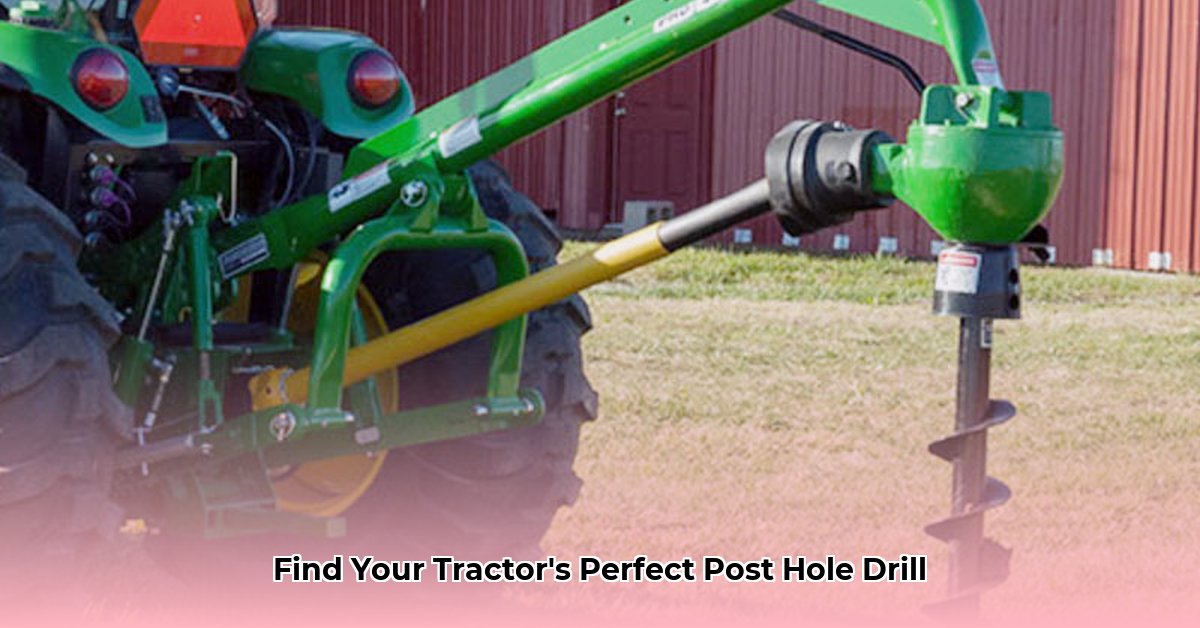
Choosing the right tractor post hole digger is crucial for efficiency and safety. This guide helps you navigate the selection process, ensuring you find the perfect match for your needs and tractor capabilities. We'll cover key factors, review popular models, and emphasize safety precautions. For more in-depth information, check out this helpful resource.
Factors to Consider When Choosing a Tractor Post Hole Drill
Several key factors influence the selection of a tractor post hole drill. Ignoring these can lead to frustration, inefficiency, and even accidents. Let's explore them in detail.
Tractor Compatibility: Horsepower and PTO Capacity
Your tractor's power is paramount. A post hole digger that's underpowered will struggle, leading to slow digging and potential damage. Conversely, an overpowered digger can be dangerous. Consult your tractor's owner's manual to determine its PTO (Power Take-Off) horsepower and three-point hitch category. The digger's specifications must align with these capacities. A mismatch can result in equipment failure or injury. Isn't it important to ensure a safe and efficient operation from the start?
Auger Size: Matching the Hole to the Post
Auger size determines the hole's diameter and directly impacts digging speed. Larger augers are faster for larger projects but demand more power. Smaller augers are better suited for smaller posts or challenging soil conditions. Before purchasing, map out your project. What size posts will you be using? How many holes need digging? The right auger size ensures a snug fit and efficient work. How many holes do you plan to dig, and what size posts will you be using?
Soil Conditions: Navigating the Terrain
Soil type significantly impacts digger performance. Hard clay requires more power than loose sand. Rocky soil demands extra durability to prevent auger damage. If you have rocky or particularly challenging soil, a heavier-duty digger with stronger augers might be necessary. Considering your soil type will prevent frustration and unnecessary wear on your equipment.
Digging Speed: Balancing Efficiency and Thoroughness
Digging speed influences project completion time. Faster diggers are advantageous for large projects, but speed often correlates to cost and increased power requirements. Consider the scale of your project. A high-speed digger might be justified for a large fence, but excessive for a small garden. What is the balance between speed and the quality of your work?
Safety Features: Prioritizing Operator Protection
Safety should always be the top priority. Choose a digger with safety features like shear bolts (to protect the gearbox from damage from rocks) or slip clutches (preventing stalling and potential damage). Always read and follow the manufacturer's instructions. Wear appropriate safety gear, including eye protection, gloves, and closed-toe shoes. Never operate the digger near others. Is your safety and the safety of others a priority?
Review of Key Models: A Comparative Analysis
Selecting the right model requires careful comparison across features. While specific models and their specifications change, the following table exemplifies the type of comparison that should be made. Note that this data is illustrative; always verify specifications with individual manufacturers.
| Feature | Model X | Model Y | Model Z |
|---|---|---|---|
| PTO HP Required | 35-55 HP | 25-45 HP | 45-65 HP |
| Auger Size (in) | 6, 8, 10 | 4, 6, 8 | 8, 10, 12 |
| Torque (ft-lbs) | 280 | 200 | 380 |
| Gear Ratios | High/Low | High/Low | High/Low/Med |
| Shear Bolt/Slip Clutch | Shear Bolt | Slip Clutch | Shear Bolt |
| Weight (lbs) | 450 | 350 | 550 |
Safety Precautions: Working Safely and Responsibly
Safe operation is paramount. Always read and understand the manufacturer's instructions before using the digger. Wear appropriate personal protective equipment (PPE), including eye protection, gloves, and sturdy footwear. Maintain a safe distance from others during operation. Regularly inspect the equipment for any signs of damage or wear. Addressing small issues promptly prevents larger problems and adds to the life of the machine. Is safety at the forefront of all your considerations?
Maintenance and Troubleshooting: Extending Digger Lifespan
Regular maintenance prevents costly repairs and downtime. Lubricate moving parts according to the manufacturer's recommendations. Inspect the auger for damage. Address issues promptly. A slow-spinning auger might indicate a PTO problem or gearbox wear. Refer to your owner's manual for detailed troubleshooting steps. Regular maintenance ensures the highest performance and safety.
Conclusion: Making an Informed Decision
Choosing the right tractor post hole digger involves considering numerous factors. Thoroughly assess your tractor's capabilities, soil conditions, project scale, and budget. Prioritize safety in every step. A well-chosen and properly maintained digger saves time, effort, and ensures years of reliable service.